Amazing that you are curious to learn more about the Flow Learning Cycle as well as about My Learning Story. Curiosity is the first step of learning something new, so you are about to learn! Yay for that! Before we dive deeper into what these two interconnected educational innovations mean and what they look, sound and feel like, we would like to show you first this videoclip in which inquiry-based (curiosity-based) learning will be explained in a super interesting way. Thanks to Professor Umbridge and Dumbledore’s Army, the big WHY of the Flow Learning Cycle and My Learning Story will be explained in an entertaining and simple way:
Pretty amazing, right?! This is what learning can look like when curiosity, exploration and learner agency take centre stage! But here comes a huge challenge: How do we actually make inquiry-based learning work in practice? Because giving learners more ownership of their learning sounds wonderful, but without a clear structure or shared framework, it can be difficult to know where to begin, how to turn questions into meaningful action and how to build on learning experiences over time.
And that is exactly where The Flow Learning Cycle and My Learning Story come in!
Together, these two interconnected educational innovations provide the structure, focus and continuity needed to turn curiosity into meaningful learning experiences, while keeping each learner’s questions, interests and personal growth at the heart of the process.
From single learning activities to systematic growth
Learning opportunities are literally everywhere. And they are super fun! Harry has showed us that! There are oh so many things to learn for children and teenagers as well as for us as adults.
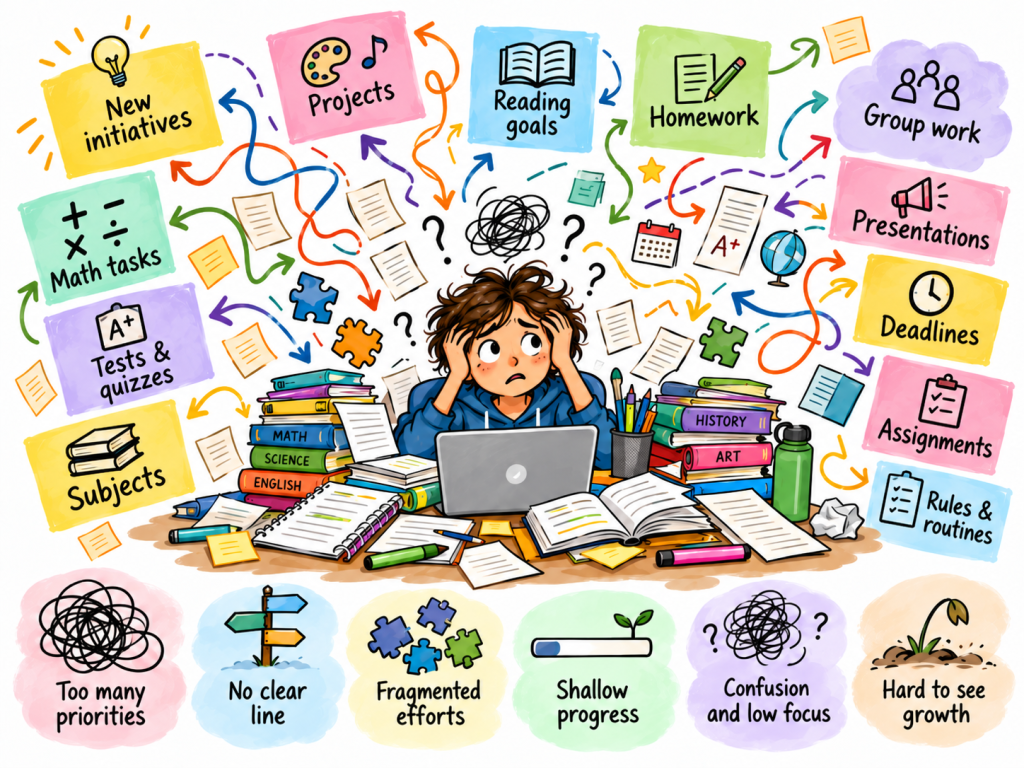
For learners at school, there are different subjects, classroom projects, reading activities, assignments, tests, presentations, group work, new learning goals and countless opportunities to discover something new. One moment they’re exploring one topic, and the next they’re already moving on to something completely different.
For us as educators, it is really not so different! We join interesting workshops and professional development sessions, explore new teaching strategies, work on improving reading skills, focus on literacy across the curriculum (because every educator is a reading educator!), introduce new learning activities and participate in school improvement projects… The list goes on and on!
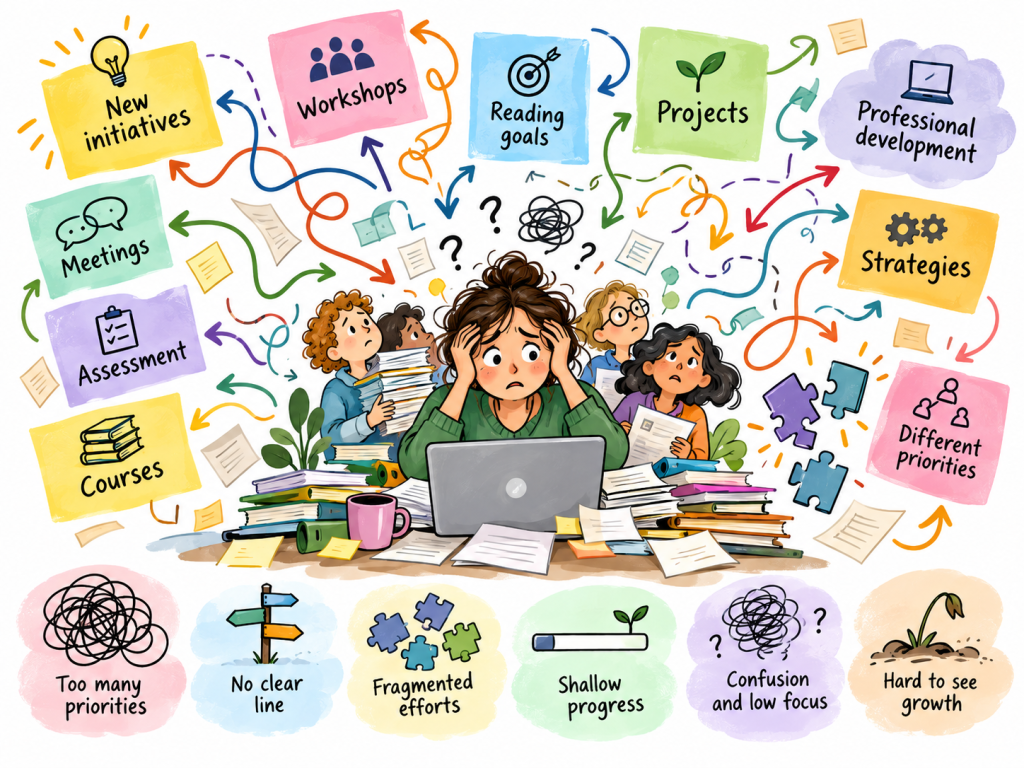
We are constantly introduced to new ideas, approaches, expectations and opportunities to learn. And that’s awesome! But are we working systematically enough to connect all these experiences and create clear, meaningful pathways for learning and growth? Do we even ever follow up afterwards?
Wayyyy too often, both children and us adults move from one learning experience to the next without a shared structure that helps us build on what we already know, explore our own questions, put new ideas into practice, reflect on our experiences and identify meaningful next steps.
So much is happening, but where is the connecting thread?
Without clear connections between our learning experiences, it becomes difficult to recognise our progress, understand what is actually working and build on what we have learned over time.
Are we learning? Are we growing? Can we actually see and celebrate that growth? And is it sustainable?
What if we could connect all these learning experiences within a shared framework, bringing focus, continuity and direction to our individual and collective learning journeys?
This is why we developed The Flow Learning Cycle and My Learning Story.
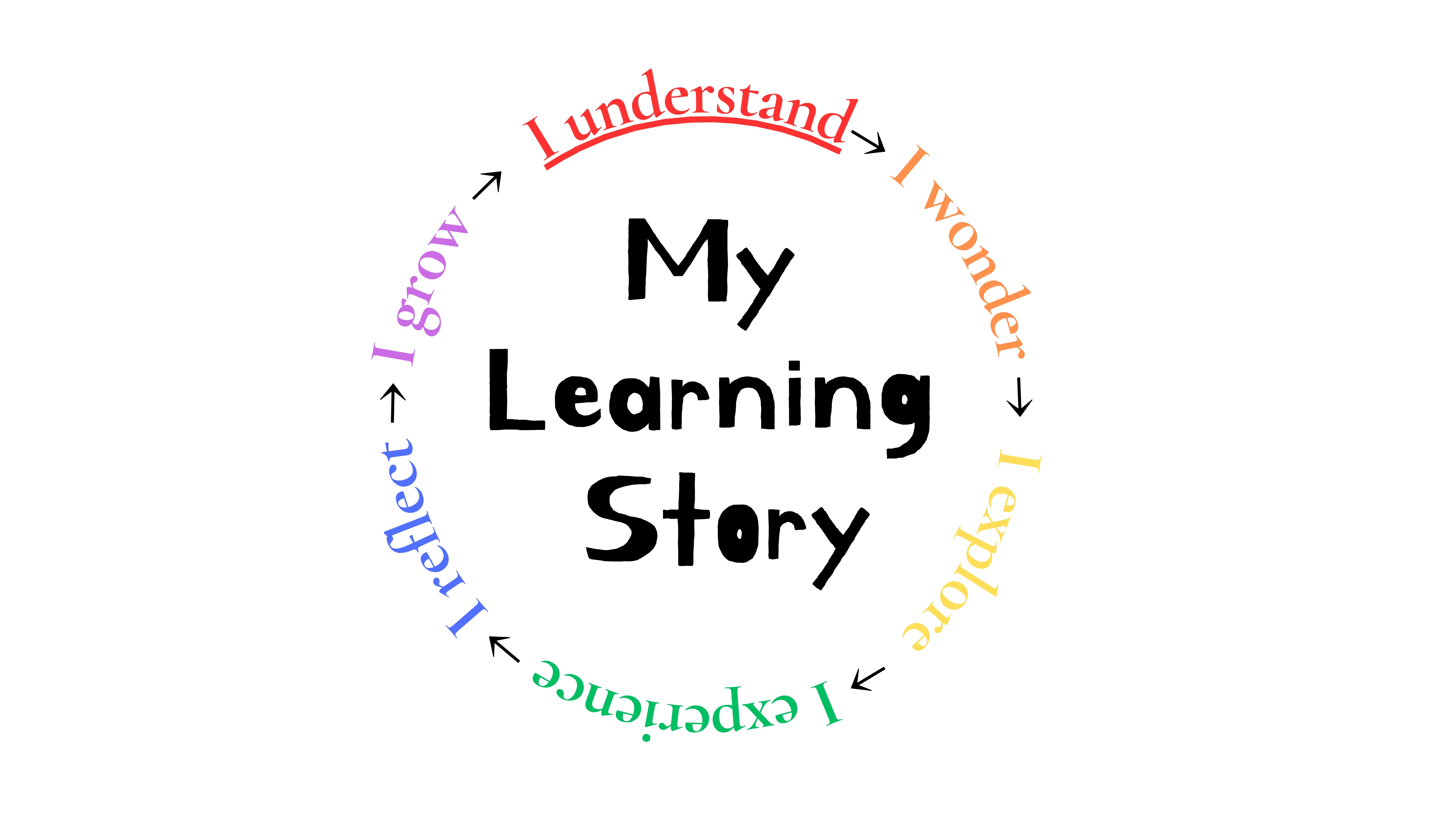
The Flow Learning Cycle and My Learning Story are two interconnected educational innovations that help us bring structure to learning, while giving every learner the freedom to follow their own curiosity and take ownership of their personal learning journey.
The Flow Learning Cycle provides a shared framework that connects our existing understanding, questions, plans, experiences and reflections into a continuous process of learning and growth.
My Learning Story makes this process visible, allowing learners to document their thinking, discoveries, experiences and reflections, recognise their progress and celebrate their personal growth.
Together, they help us move beyond isolated learning activities towards more intentional, connected and sustainable learning. It is important to understand that the framework/the structure is shared, but that each learning journey is personal.
How Does This Work in Practice?
Let’s explore The Flow Learning Cycle and My Learning Story step by step, and see how they work together to bring structure, continuity and meaningful growth to learning.
We’ll also share real-life examples from both children and adult learners to show how this approach can be used in practice.
The Flow Learning Cycle – A Shared Framework
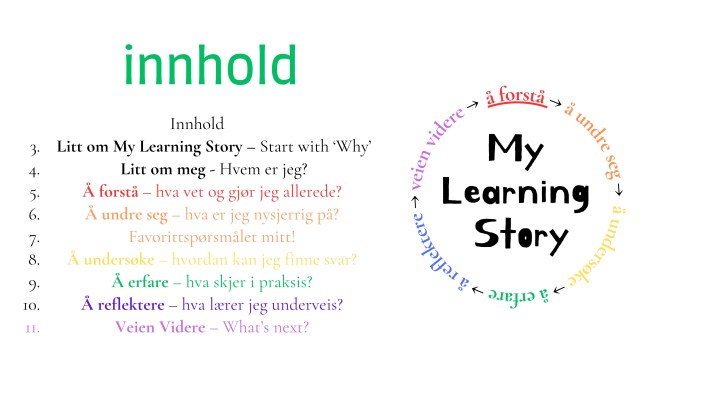
I Understand → I Wonder → I Explore → I Experience → I Reflect → I Grow
The Flow Learning Cycle provides a shared framework that connects learning experiences into a continuous process of exploration, action, reflection and growth.
Rather than jumping from one activity or initiative to the next, learners are encouraged to:
- I Understand: Make visible what they already know, can do, think and have experienced.
- I Wonder: Discover what makes them curious, generate questions and choose a meaningful Favourite Question.
- I Explore: Investigate possibilities and develop a concrete, step-by-step plan to explore their Favourite Question.
- I Experience: Put their plan into action, experiment, discover and learn through experience.
- I Reflect: Reflect on what happened, what they discovered, what worked and what they learned.
- I Grow: Recognise and celebrate their personal growth, and identify new questions and opportunities for further learning.
Each phase of The Flow Learning Cycle has its own colour, making the learning process visual, recognisable and easy to follow.
The learning process is not necessarily linear. Learners can revisit phases, adjust their plans and follow new questions as they emerge. The cycle provides structure without prescribing what every learner must do within it. Everyone brings their own experiences, interests, questions, strengths and readiness to learn.
My Learning Story: Making Learning and Growth Visible
While The Flow Learning Cycle provides the structure, My Learning Story makes the entire learning journey visible. Learners document their starting points, questions, plans, experiences, discoveries and reflections, creating a personal record of their learning and growth.A ‘My Learning Story‘ can be created entirely on paper or digitally, using notebooks, drawings, photographs, videos, Canva, Book Creator or any other creative format. Learners can even turn their My Learning Story into a video, narrating their journey in their own words. This creates wonderful opportunities to practise reading aloud, especially when reading texts they have written themselves!
The Flow Learning Cycle provides a clear, shared structure, while learners have the freedom to explore their own questions and express their thinking, experiences and growth in ways that reflect their unique strengths, interests and abilities.
By revisiting their Learning Stories, learners can recognise how their understanding has developed, discover connections between experiences and celebrate their progress.
And because we are all learners, My Learning Story is for everyone, regardless of age!
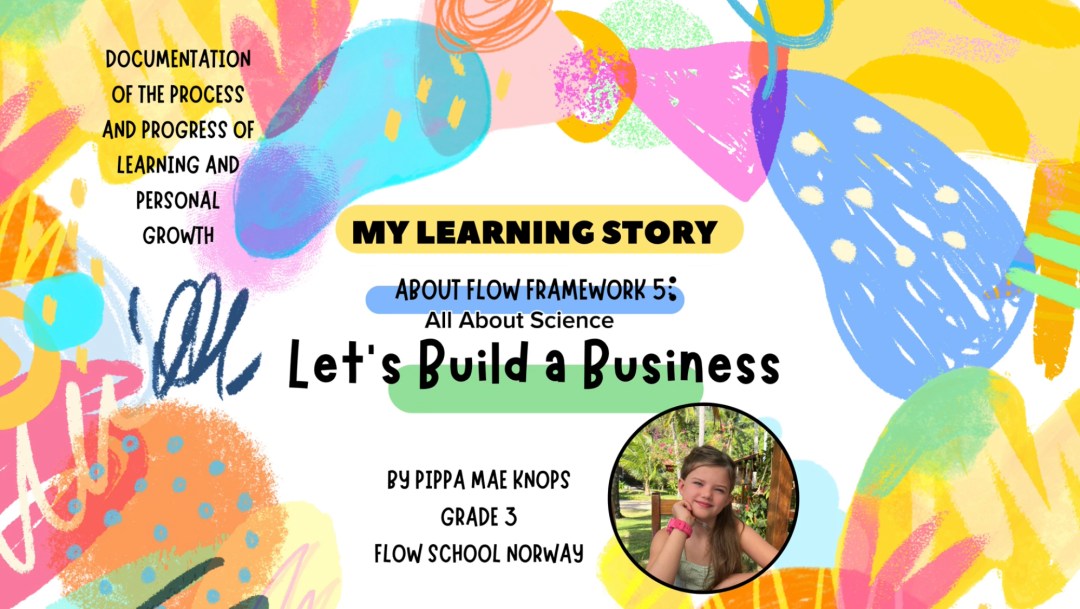
To show you what this looks like in practice, we’re sharing two real-life examples: a My Learning Story about building a business, created by a 9-year-old learner:
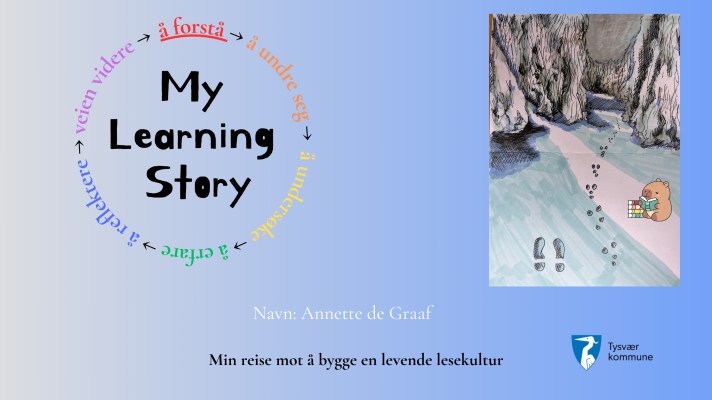
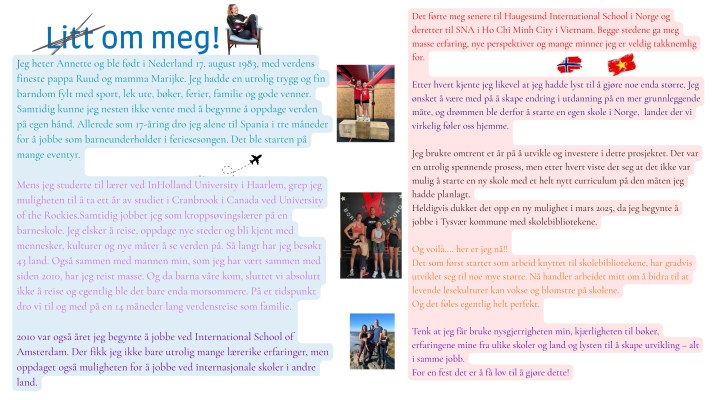
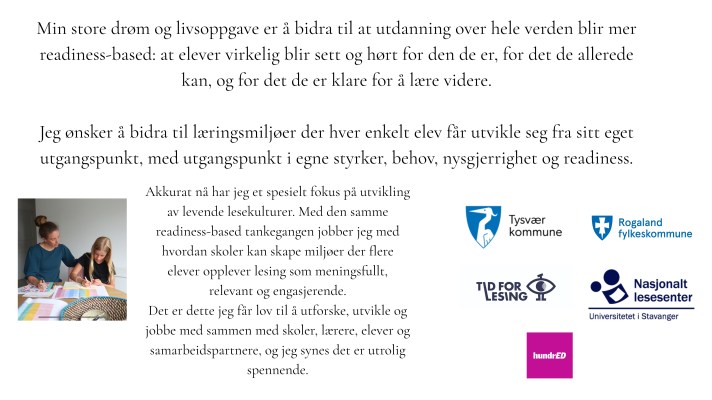
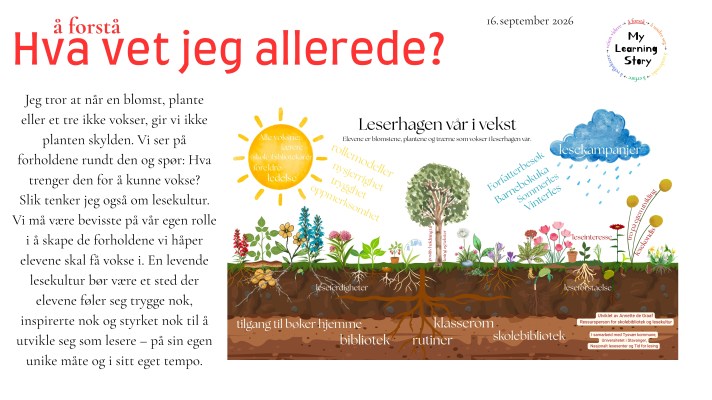
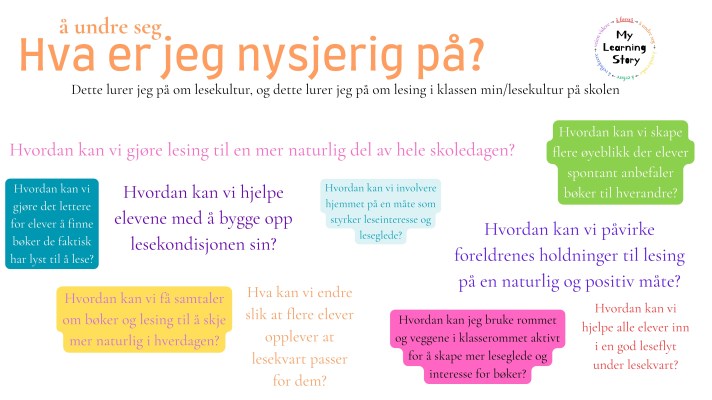
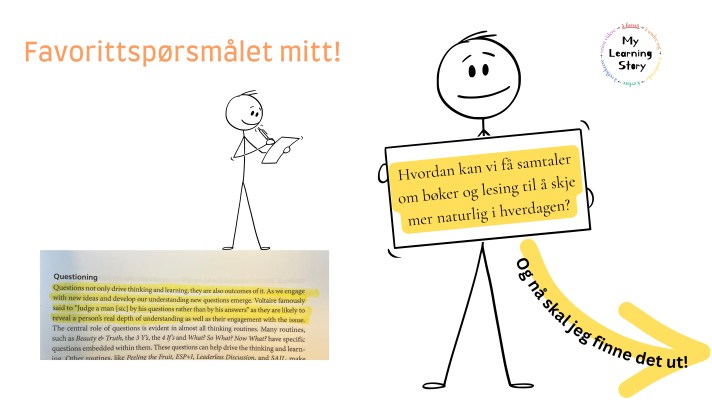
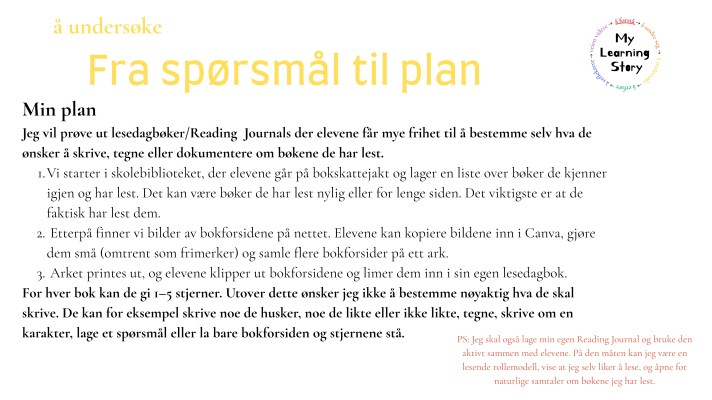
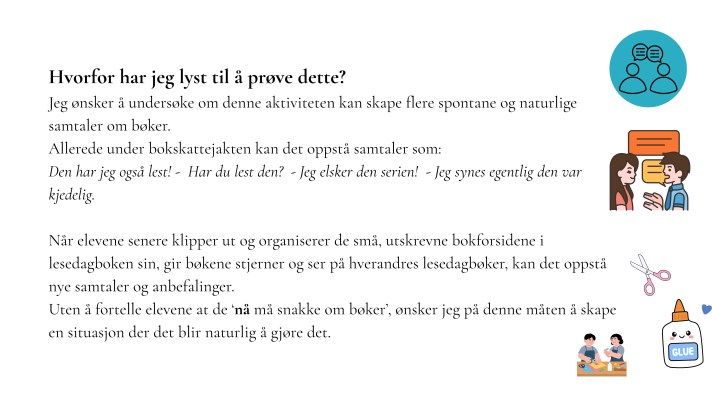
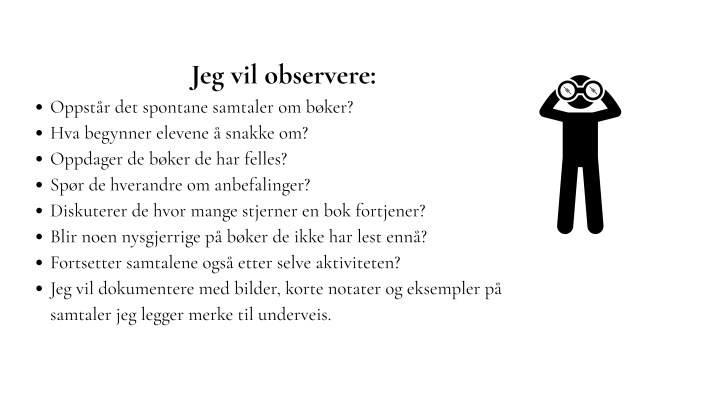
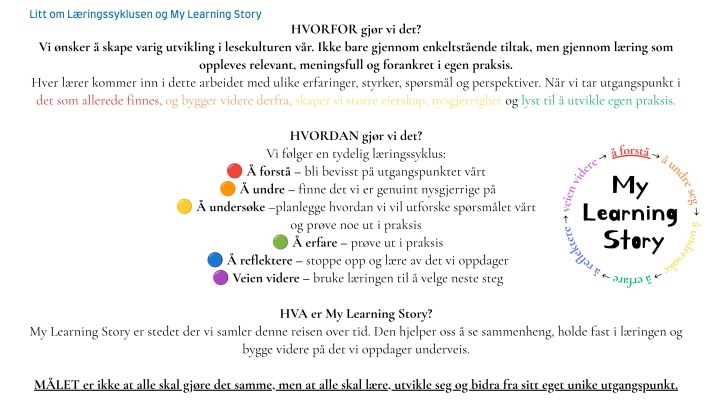
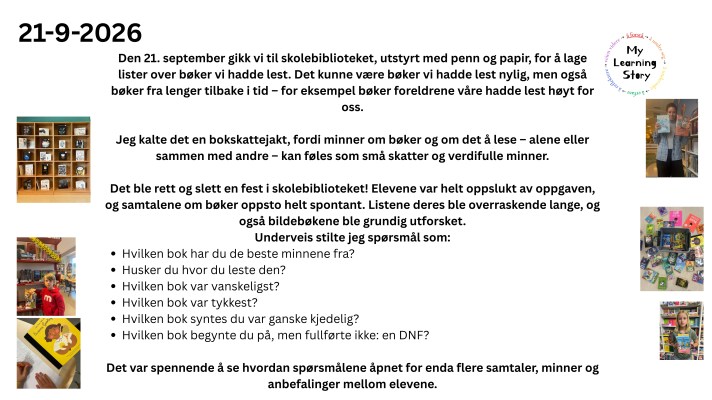
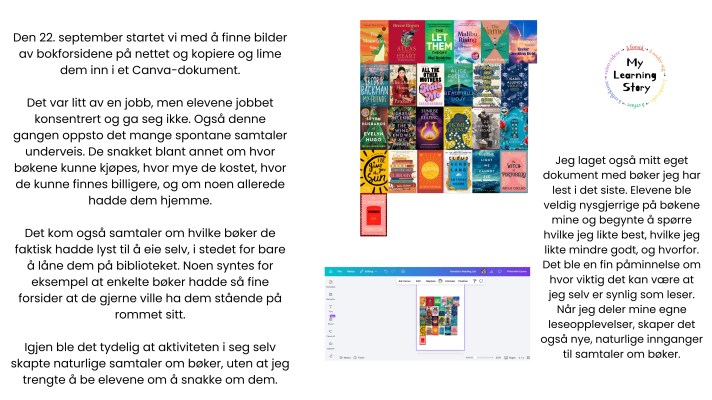
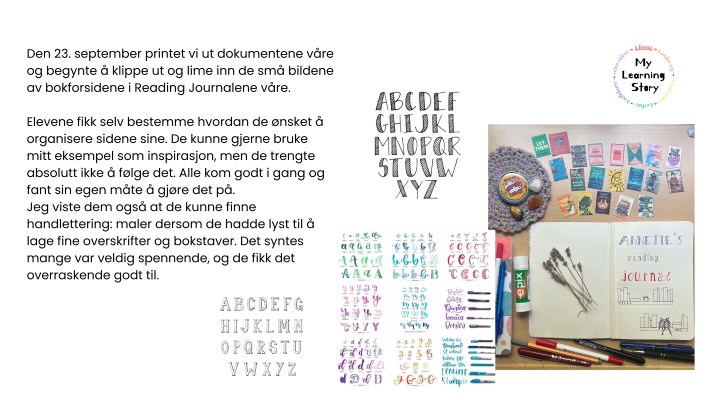
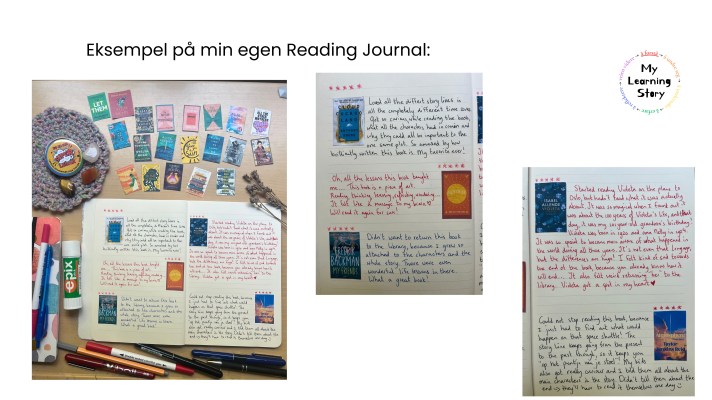
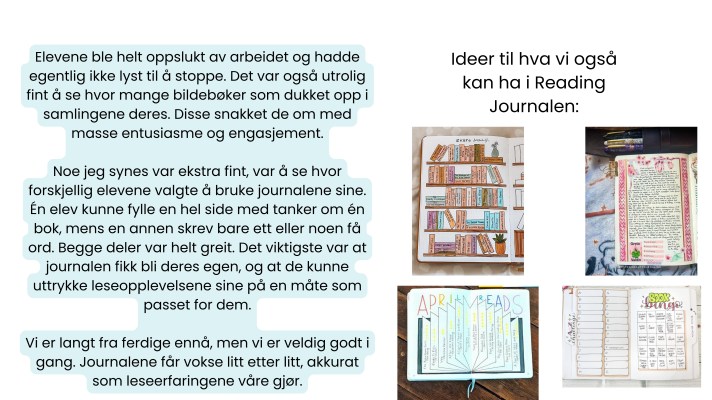
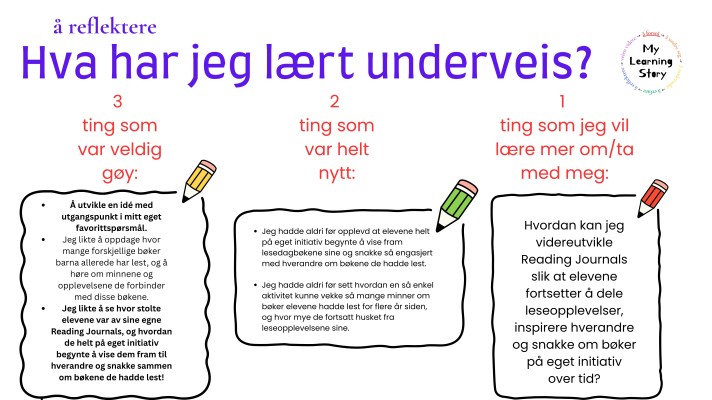
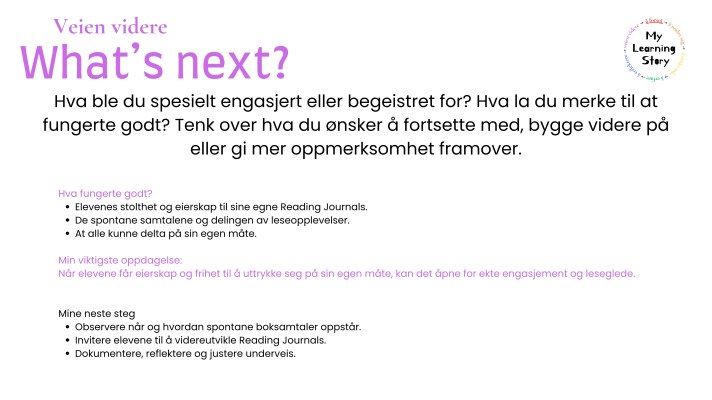
……….. and a My Learning Story (in Norwegian) about developing a flourishing reading culture, created by a 43-year-old educator:
The Flow Learning Cycle – Step by Step
Exploring the Six Phases and the Pages of My Learning Story
To explain the process of going through each step of the Learning Cycle and simultaneously creating a My Learning Story, we will explain all the steps for you here, including examples of a My Learning Story designed by a 9 year old and a 43 year old learner.
Ready? Let’s go!
— — — — — — — — — — — — — — — — — — — — — — — — — — — — — —
Step 1. I Understand – What do I already know, think, and understand?
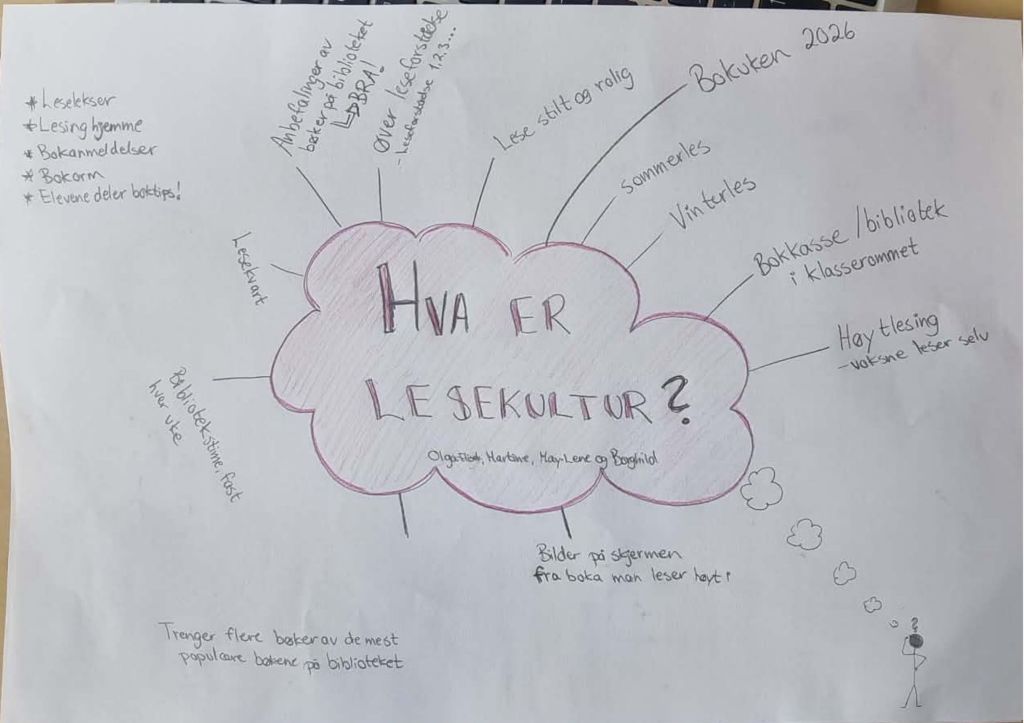
Every learning journey begins by making our current understanding visible: What do I already know? What do I think I know? What have I experienced? What can I already do? Learners explore and document their starting points through writing, drawing, mind maps, conversations, symbols, or other forms of expression.
Learners can make an analog poster or use a device to create a mindmap about all they think they know and understand about the topic.
Their existing knowledge, skills, perspectives, and experiences are recognised, valued, and celebrated. This creates a meaningful foundation for further learning.
— — — — — — — — — — — — — — — — — — — — — — — — — — — — —
2. I Wonder – What am I curious about?
Curiosity gives learning direction and purpose.
What do I wonder? What would I love to understand better? What would I like to learn, explore, or become better at?
Learners generate questions, share perspectives, discover new possibilities, and develop their curiosity.
They are encouraged to ask as many questions as possible, explore different perspectives, and eventually choose a favourite question that feels meaningful and exciting enough to investigate further.
The learner’s own curiosity becomes a driving force in their learning journey.
— — — — — — — — — — — — — — — — — — — — — — — — — — — — —
3. I Explore – How can I put my Favorite Question into Action?
With their favourite question in mind, learners begin exploring possibilities and planning their next steps.
What do I need to find out? Where can I look? Who can help me? What resources, experiences, or opportunities could support my learning? What could I try, and how can I get started?
Learners investigate possibilities, gather information, exchange ideas, and develop a personalised, step-by-step plan to bring their favourite question into action.
With guidance and support when needed, they decide what they want to do, how they will do it, what they need, and when they will begin.
Their curiosity provides the direction, and their plan creates a pathway towards action.
— — — — — — — — — — — — — — — — — — — — — — — — — — — — — — —
Step 4. I Experience – Time for action!
Learning comes alive through experience! Just try out new strategies and new ideas! In this phase, learners put their plans into action. They experiment, create, practise, collaborate, make discoveries, overcome challenges, and learn from what happens along the way.
Not everything goes according to plan, and that is the best part of the learning journey…! Unexpected discoveries, mistakes and new questions can lead to even deeper learning.
Learners document their experiences through photographs, videos, observations, conversations, creations, or other forms of expression.
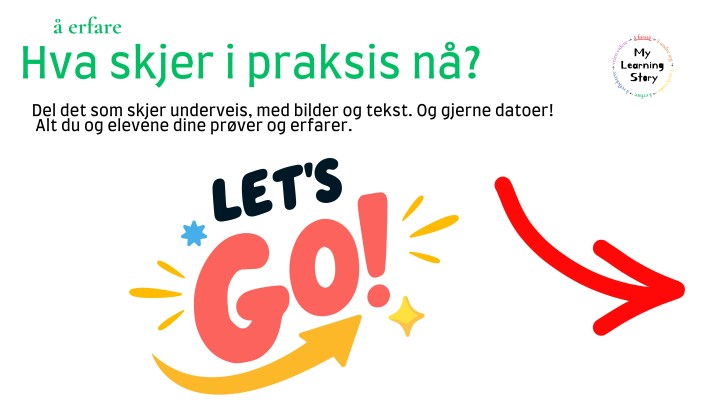
There is not a set amount of pages for the ‘I Experience’ phase. Anything can happen here, so just keep adding as many pages as needed. This part of MLS will look like a diary or a journal.
— — — — — — — — — — — — — — — — — — — — — — — — — — — — — —
5. I Reflect – What and how have I learned?
Reflection helps learners recognise and understand their own growth.
What did I discover? What surprised me? What worked? What was challenging? What can I do or understand now that I couldn’t before? Has my thinking changed?
Learners revisit their starting points, explore their experiences, and make their progress visible.
When reflecting is so much fun that you can’t stop making new pages about what and how you have learned…!
— — — — — — — — — — — — — — — — — — — — — — — — — — — — — — —
6. I Grow – How Have I Grown, and What’s Next?
Now it’s time to recognise and celebrate your personal growth!
Look back at where you started. What do you know, understand or feel more confident about now? What can you do that you couldn’t do before? What are you proud of?
In My Learning Story:
Return to your I Understand page and compare your starting point with where you are now. Make your growth visible and celebrate your achievements, discoveries and progress!
— — — — — — — — — — — — — — — — — — — — — — — — — — — — — — —
Why does this systematic approach work?
Learning becomes more meaningful when experiences are connected rather than treated as separate activities. By following The Flow Learning Cycle, learners build on what they already know, explore their own questions, turn ideas into action, reflect on their experiences and identify meaningful next steps. This creates structure, focus and continuity, while leaving room for curiosity, creativity and personal learning journeys. Through My Learning Story, the entire process becomes visible, making it easier to recognise progress, celebrate growth and build on what has been learned.
Instead of constantly starting something new, we keep growing from where we are.
— — — — — — — — — — — — — — — — — — — — — — — — — — — — — — — — — — —
My Learning Story can be used in a huge variety of ways to document learning in individual subjects, interdisciplinary projects, personal development, relationships, social-emotional learning, and professional growth.
Examples include:
- My Mathematics Learning Story — exploring percentages through real-life applications
- My Language Learning Story — documenting the experience of learning a new language
- My Learning Story About Being a Good Friend — developing empathy, relationships, and social understanding
- My Learning Story About Sustainability — exploring questions about the natural world
- My Learning Story about growing a flourishing reading culture — educators investigating how to develop a thriving reading culture in their learning community
The most important part (we think!) is that My Learning Story celebrates the uniqueness of every learner and every learning journey.

